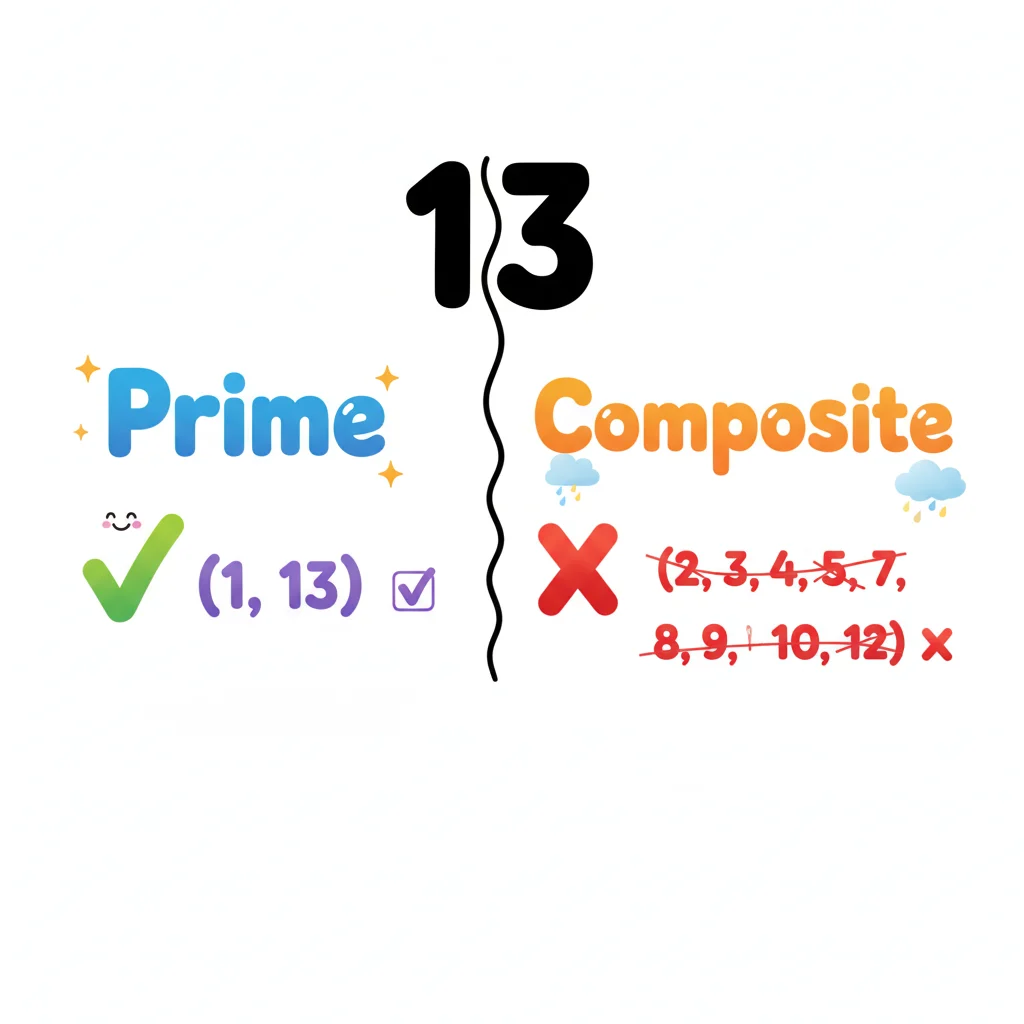
13 is a PRIME number because it has only two factors: 1 and 13. It cannot be divided evenly by any other number.Many students and adults often wonder: Is 13 prime or composite? These two math terms can be confusing, especially when you’re learning numbers in school. The good news is that understanding the difference between prime numbers and composite numbers is actually very simple when explained in a friendly, step-by-step way.
In this guide, you will learn the meaning of prime and composite, what makes them different, and how to quickly decide where the number 13 belongs. We’ll use easy examples, comparison tables, and fun memory tricks so even a Grade-4 student can master this topic.
By the end, you’ll be able to confidently answer:
✔ Is 13 prime or composite?
✔ How do I check prime vs composite?
✔ How can I avoid common mistakes?
Let’s begin!
What Does Each Word Mean? (Prime vs Composite)
Understanding 13 prime or composite starts with clear meanings.
Prime Number
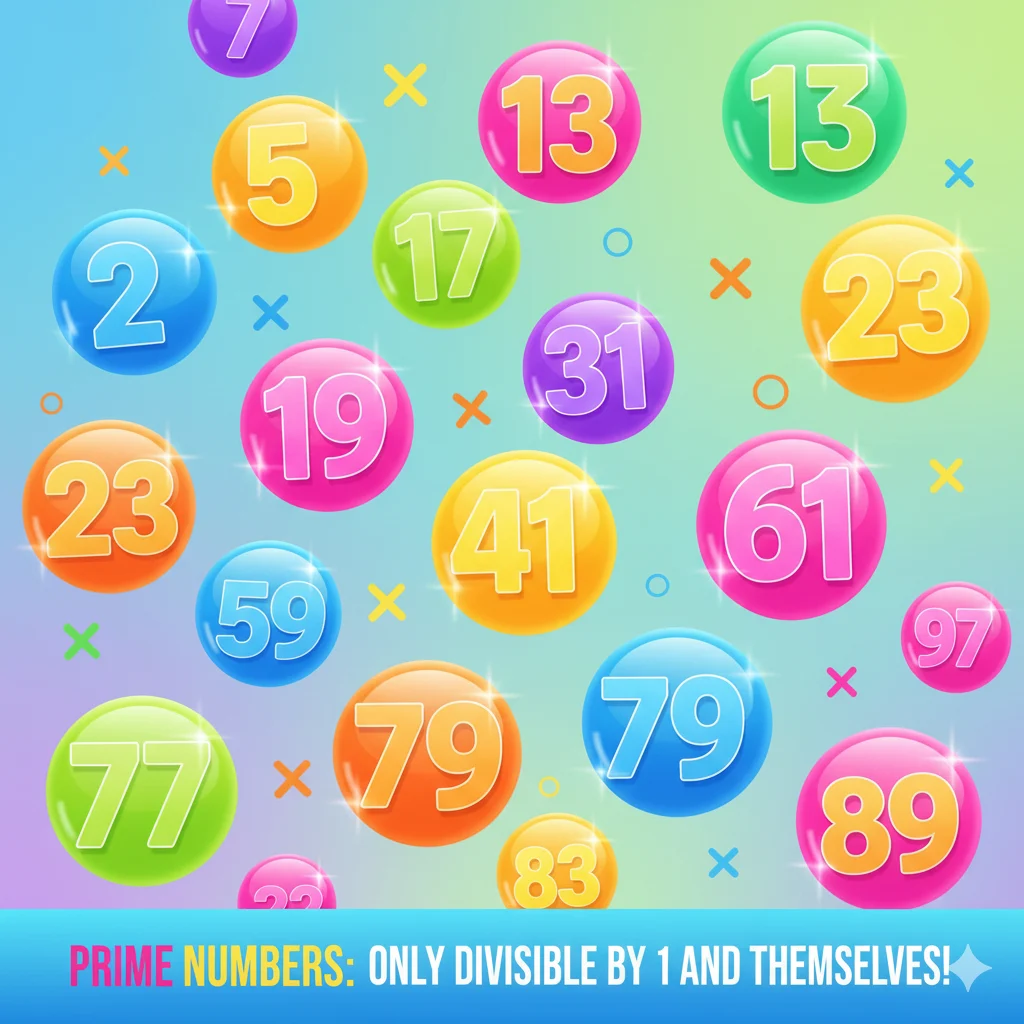
A prime number is a number that has only two factors:
- 1
- Itself
That means you cannot divide it evenly by any other number.
Easy Examples of Prime Numbers
- 2 → only divisible by 1 and 2
- 5 → only divisible by 1 and 5
- 13 → only divisible by 1 and 13 (Important!)
Mini Story
Imagine a prime number as a person who likes to keep a small friend circle—only two friends: 1 and themselves.
Composite Number

A composite number has more than two factors.
This means it can be divided evenly by 1, itself, and other numbers.
Easy Examples of Composite Numbers
- 4 → divisible by 1, 2, 4
- 9 → divisible by 1, 3, 9
- 12 → divisible by 1, 2, 3, 4, 6, 12
Mini Story
A composite number is like someone who has a big friend circle with many people they can divide evenly with.
The Key Difference Between 13 Prime or Composite
Here’s the most important part:
✔ 13 is a PRIME number
because it has only two factors: 1 and 13.
It cannot be divided evenly by 2, 3, 4, 5, 6… or any other number.
Comparison Table: Prime vs Composite (with 13 in focus)
| Feature | Prime Number | Composite Number |
|---|---|---|
| Number of factors | Exactly 2 | More than 2 |
| Example | 13, 11, 7, 5 | 4, 6, 8, 9, 10 |
| Divisible by 1 and itself? | Yes | Yes |
| Divisible by other numbers? | No | Yes |
| Is 13 prime or composite? | 13 is prime | Not composite |
Quick Tip to Remember 13 is Prime
➡ If a number cannot be divided by any number except 1 and itself, it’s prime.
Try dividing 13 by 2, 3, 4… none of them work!
So 13 = Prime.
Poinsettia Indoor or Outdoor: The Shocking Truth Revealed 😮🌱
Common Mistakes and How to Avoid Them
Here are mistakes students often make:
❌ Mistake 1: Thinking 13 is Composite Because It’s “Big Enough”
Wrong Example:
“13 is composite because it’s bigger than 10.”
✔ Correct:
Size doesn’t matter. Factors do.
❌ Mistake 2: Only Checking 2 or 3 as Divisors
Some students check:
- 13 ÷ 2 (no)
- 13 ÷ 3 (no)
…and stop.
✔ Correct:
Always check all numbers up to the square root (but for kids: just check 2, 3, 4).
❌ Mistake 3: Confusing ‘Odd’ with ‘Composite’
Odd numbers can be prime OR composite.
Example:
- 9 is odd but composite
- 13 is odd but prime
When to Use the Term “Prime Number” (with Examples)
Use “prime number” when describing a number that has exactly two factors.
Clear Examples
- 13 is a prime number because it has only two factors.
- 2 is the smallest prime number.
- My teacher asked us to list prime numbers below 20.
- Prime numbers are important in math puzzles and coding.
- We learned that 13, 17, and 19 are prime numbers.
When to Use the Term “Composite Number” (with Examples)
Use “composite number” when a number has more than two factors.
Clear Examples
- 12 is a composite number because it has many factors.
- The number 9 is composite since 3 × 3 = 9.
- Our homework asked us to find composite numbers between 1 and 20.
- 15 is composite because it can be divided by 3 and 5.
- Not all even numbers are composite, but most are.
Memory Hack
📌 Prime = Private (small group)
📌 Composite = Crowd (big group)
So:
13 → Private group → PRIME
Quick Recap: 13 Prime or Composite?
- Prime = only 2 factors
- Composite = more than 2 factors
- 13 has only 2 factors (1 and 13)
👉 Therefore, 13 is a PRIME number.
Advanced Tips
1. Origin of Prime and Composite Concepts
The idea of prime numbers comes from Ancient Greek mathematics. Mathematicians like Euclid studied them thousands of years ago.
2. Why Primes Are Important in Modern Computing
Prime numbers like 13 are used in coding, encryption, and security systems.
3. Avoiding Misuse in Homework or Exams
Never guess based on size or odd/even status. Always check factors.
Mini Quiz: Test Yourself!
Fill in the blanks:
- 13 is a ________ number.
- A prime number has exactly ________ factors.
- 12 is a ________ number.
- A composite number has ________ than two factors.
- 13 can only be divided by ________ and ________.
- 2, 3, 5, 7, 11, 13 are all ________ numbers.
- 9, 12, 15 are all ________ numbers.
Helpful FAQs
1. Is 13 prime or composite?
13 is a prime number because it has only two factors: 1 and 13.
2. Why is 13 considered a prime number?
Because it cannot be divided evenly by any number other than 1 and itself.
3. Can a number be both prime and composite?
No. A number is either prime or composite, never both.
4. Is 1 a prime or composite number?
Neither. 1 is special and is not classified as prime or composite.
5. What is the quickest way to check if a number is prime?
Try dividing it by small numbers (2, 3, 4…). If none divide evenly, it is prime.
Conclusion
Understanding whether 13 is prime or composite becomes very easy when you know the simple rules. Prime numbers have exactly two factors, while composite numbers have many factors. Since 13 can only be divided by 1 and 13, it is clearly a prime number.
Now you can quickly check any number using the same method. With practice, recognizing prime and composite numbers will feel natural and fast. Keep learning, keep exploring, and keep improving your math skills one easy step at a time. You’ve got this!

Kael Donovan is a language enthusiast and writer at Definevs.com, simplifying complex words and grammar rules into fun, easy-to-understand guides for readers.